The State of Security in Germany: Statistics, Trends, and Where Technology Falls Short

Storyblok is the first headless CMS that works for developers & marketers alike.
- Dive deeper into the data with Storyblok’s full report. Download the global State of Security 2026 (opens in a new window) for free today.
- Hear IT experts weigh in with our free on-demand webinar, The True State of Security 2026: Why Imbalance is Your Organization's Biggest Threat (opens in a new window)
No matter where your business operates, security is a paramount concern. But while the concern may be universal, the struggles are not. Different regions face different challenges in keeping their systems safe. And in the State of Security 2026, (opens in a new window) one unique trend became apparent from the German sample:
German respondents are serious about their system security – but when it comes to the tech they’re using to achieve it, it’s letting them down across the board.
In this article, we’ll dive deeper into this regional data. We’ll cover German security statistics, struggles, and why they should upgrade to a tech stack that’s just as serious about security as they are.
Let’s get started.
This article covers just one-third of our data on CMS security in 2026. To get the full picture, download the global State of Security 2026 for free today.
Security confidence: Highs and lows
Let’s start with the positives. German users reported reassuring confidence across some crucial cybersecurity areas:
- 69% of German users reported feeling most secure in their business’s cloud systems and integrations
- 56% reported confidence in their capability to protect customer data
- 54% felt confident in meeting compliance and regulatory standards
However, these successes don’t come without struggles. Users reported the least confidence in their day-to-day operations and internal tools. These might not be flashy, but they are absolutely crucial to secure operations – and gaps represent a dangerous vulnerability.
Internal security gaps are more dangerous than they may appear. Learn more about insider threats and how you can safeguard your system against them.
Where technology is failing
Unfortunately, internal operations aren’t the full picture. There were a few other concerning data points, both of which point towards the fault being technical rather than strategic:
- 50% of German respondents had a security issue impact their content strategy in the past year - a death knell in an increasingly content-forward world
- 50% only rated their readiness to respond to such incidents as somewhat prepared, indicating that plans are in place but in need of improvement
On the bright side, this pair of statistics also indicates something about the sample we talked to: technology might be getting in their way, but they’re well aware of it. This alone can help them make improvements and mitigate damage, but it also raises a bigger question:
Should teams really have to spend their time and resources making up for the limitations of their tech stack?
According to the German respondents themselves, the answer is an emphatic “no”:
- 44% state that the complexity of existing systems is their biggest barrier to improving security
Building modern digital experiences is no small feat. Agility is essential for creation, but equally so for security. If you can’t upgrade your safeguards, integrate the latest security tools, and train team members with ease, no amount of security consciousness can help.
Agility is important for a lot more than security, especially when it comes to growth. Learn more about how Storyblok helps enterprises scale.
The common thread: Legacy CMS
Security issues can arise from a wide variety of causes. However, the research shows that one attribute definitely tips the scales for German users: whether they were on a legacy or headless CMS.
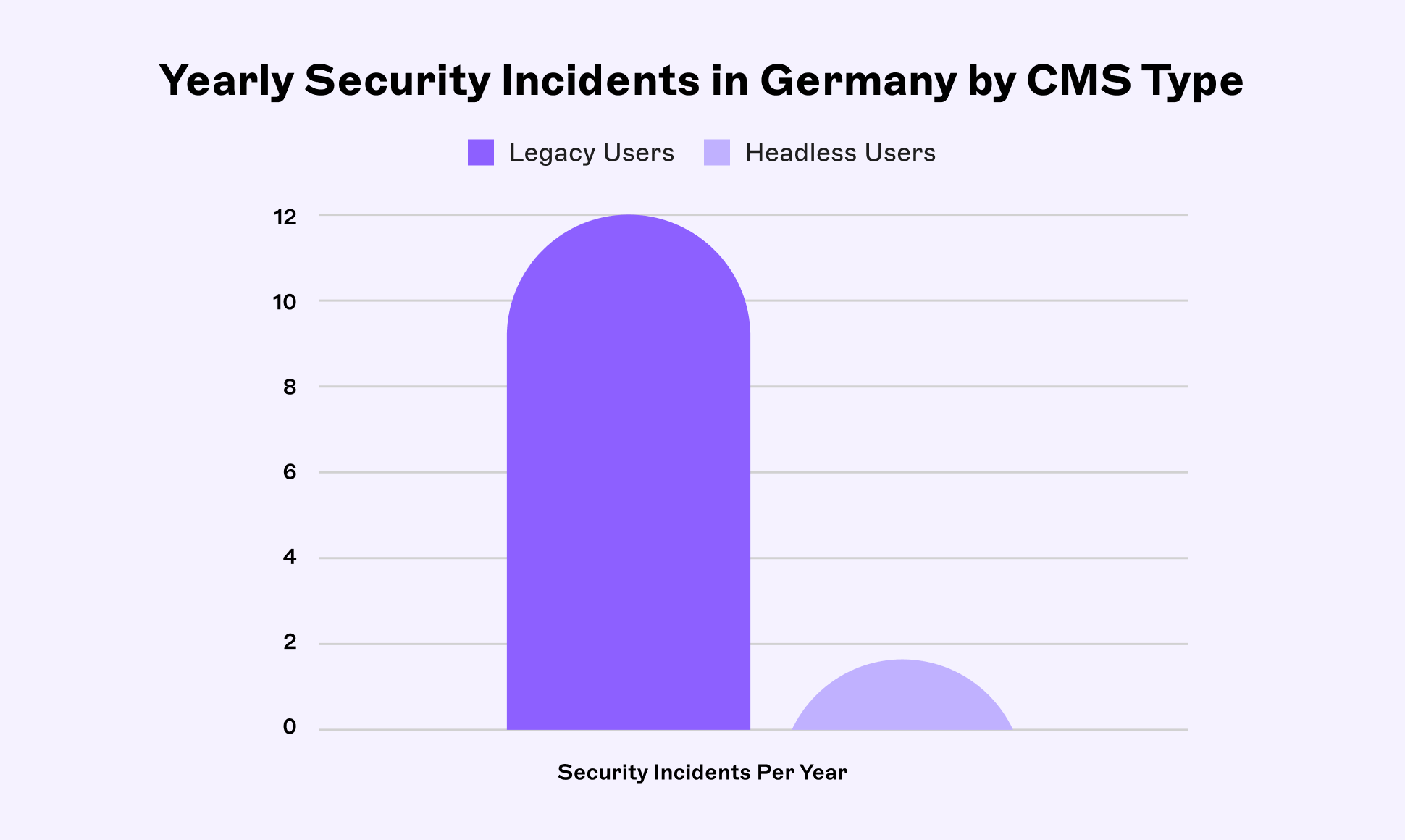
62% reported using legacy systems. 38% reported using headless. But the average frequency of security incidents doesn’t quite follow the same distribution:
- Legacy users in Germany reported having one security incident per month
- Headless users in Germany reported having one to two security incidents per year
That means German legacy users have anywhere from 6 to 12 times as many security incidents as their headless counterparts.
Not only does this obviously carry a whole host of risks to combat in the present, but it’s also slowing future innovation. When teams are constantly patching security gaps and watching their backs, it’s hard to break barriers and innovate. Legacy systems force users to focus on surviving instead of thriving.
Hear from a tech expert on why headless CMSs are more secure than legacy CMS.
Key takeaways
Despite these struggles, German users remain confident in their own abilities: 69% reported that their overall level of security is above average. It might seem at odds with the security challenges they reported facing.
But that doesn’t mean they’re wrong.
Our survey shows German users have a keen understanding of their strengths as well as their challenges. They know where to shore up their defenses, they’re realistic about their preparation plans, and they’re well aware of the biggest threats users face today. All that’s missing is technology that can rise to the same high standards.
The teams are willing. The technology is weak.
Dive deeper into the data with Storyblok’s full report. Download the global State of Security 2026 (opens in a new window) for free today.