Best CMS for SEO: Top 10 Platforms and How to Evaluate Them

Storyblok is the first headless CMS that works for developers & marketers alike.
TL;DR: Sustainable search performance relies on three connected pillars: reliable site performance, relevant content, and clear topical authority. Modern content management systems support this by treating content as structured data, making it straightforward to scale international localization, deliver clean HTML to crawlers, and keep digital experiences fast across every channel. A headless CMS gives developers the control to build ultra-fast frontends. Storyblok unites that architectural freedom with a Visual Editor, so marketers can publish content without sacrificing speed or skipping out on SEO best practices.
Great organic performance rests on three pillars: a bulletproof technical foundation, content relevance, and domain authority. While legacy platforms try to patch search requirements with layers of third-party plugins that drag down site speed, modern CMSs pair clean, lightweight architecture with effortless editorial autonomy. Finding the best CMS for SEO means choosing a platform that delivers on both sides of the screen, giving engineers complete architectural control while empowering content teams to publish without filing a development ticket. This guide breaks down the core technical evaluation criteria, the architectural trade-offs between headless and monolithic systems, and the top 10 platforms delivering search excellence today.
What's included in this article:
- What to consider when choosing a CMS for SEO?
- Essential SEO capabilities checklist
- 10 best CMS platforms for SEO
- Headless CMS vs Monolithic CMS for SEO: A quick comparison
- Frequently asked questions
What to consider when choosing a CMS for SEO?
Before evaluating specific platforms, you should consider what technical capabilities define a truly SEO-friendly CMS.
The best SEO-friendly CMS platform protects Core Web Vitals, structures schema cleanly for search bots and LLMs, and eliminates localization bottlenecks when publishing content across multiple markets.
Built-in or integrated SEO tools
Different content management systems offer different features and types of SEO tools. Many systems provide the option to integrate third-party tools in addition to built-in SEO features.
For instance, monolithic systems like WordPress allow users to install plugins for SEO. On the other hand, headless systems will enable you to integrate SEO tools through an application programming interface (API).
Content structuring and organization
A content management system should strategically structure and organize content, enabling search engine crawlers to understand your website. This makes it significantly easier for search engines to index and rank your pages accurately. This involves:
- Using SEO-friendly URL structures.
- Customizable metadata options that allow you to fine-tune essential elements such as title tags and meta descriptions.
- Generation of XML sitemaps to aid with efficient navigation and indexing.
Page loading speed optimization
A high-performing CMS goes beyond content management by actively contributing to your website’s loading speed optimization. This is a crucial ranking factor in Google’s algorithm. It includes:
- Proficiently handling images and multimedia.
- Integration with content delivery networks (CDNs) to ensure swift content delivery across the globe.
- Using tools to make CSS and JavaScript files smaller and easier to read.
Mobile responsiveness
A modern CMS should be mobile responsive because more than half of all internet traffic comes from mobile devices. At the same time, Google has stated multiple times that it prioritizes (opens in a new window)mobile-friendly websites (opens in a new window) in search results.
Look for a CMS that offers responsive templates, ensuring your website looks and functions seamlessly on various mobile devices. This aligns with current user behavior and positively impacts your website's search engine rankings.
URL canonicalization
Duplicate content can negatively impact your SEO efforts. A robust CMS addresses this issue through effective URL canonicalization. This involves:
- Setting preferred URLs to establish a canonical version of your content.
- Implementing redirects when necessary.
By managing URL structures adeptly, a CMS ensures that search engines recognize your content's most relevant and authoritative version.
Essential SEO capabilities checklist
Before committing to a platform, you need to know whether its architecture can support both modern search standards and daily publishing demands. Use this six-point evaluation framework to assess whether a CMS delivers the speed, structured data, and editorial independence required to succeed.
- Marketer autonomy: Non-technical teams can manage title tags, meta descriptions, image alt text implementation, Open Graph data, internal linking, and without relying on developer sprint cycles.
- Core Web Vitals and CDN caching: Native image transformation services, WebP/AVIF compression, and global edge CDN caching ensure sub-second First Contentful Paint (FCP) and flawless Largest Contentful Paint (LCP) scores.
- Schema and structured data: Content models in a headless CMS provide the foundation to generate Schema markup cleanly, enabling search engines and LLM answer engines to parse entity relationships accurately.
- Rendering flexibility: Seamless integration with modern frameworks (SSR, SSG, or ISR) ensures search engine bots receive fully rendered HTML for reliable crawling and indexing.
- Automated sitemaps and canonical control: Automated tools manage dynamic XML sitemaps, self-referential canonical tags, and robots.txt directives to safeguard against crawl errors and duplicate content.
- Multi-market and localization scale: Field-level or folder-level translation with automated hreflang mapping prevents regional keyword cannibalization across international sites.
Choose a CMS backed by strong developer support, and know where the line is drawn. With a global team of over 250 people, Storyblok’s dedicated engineers handle the heavy lifting, continuously optimizing cloud infrastructure, asset delivery, and API performance to meet modern search and AI indexing demands. Storyblok lets you publish with confidence across multiple platforms and markets, but remember: your own developers must still implement the frontend changes, structured data, and framework updates needed to win in SEO and GEO.
10 best CMS platforms for SEO
Now that we know what to look for, let's compare the most popular options when looking for the best SEO CMS platform.
1. Storyblok
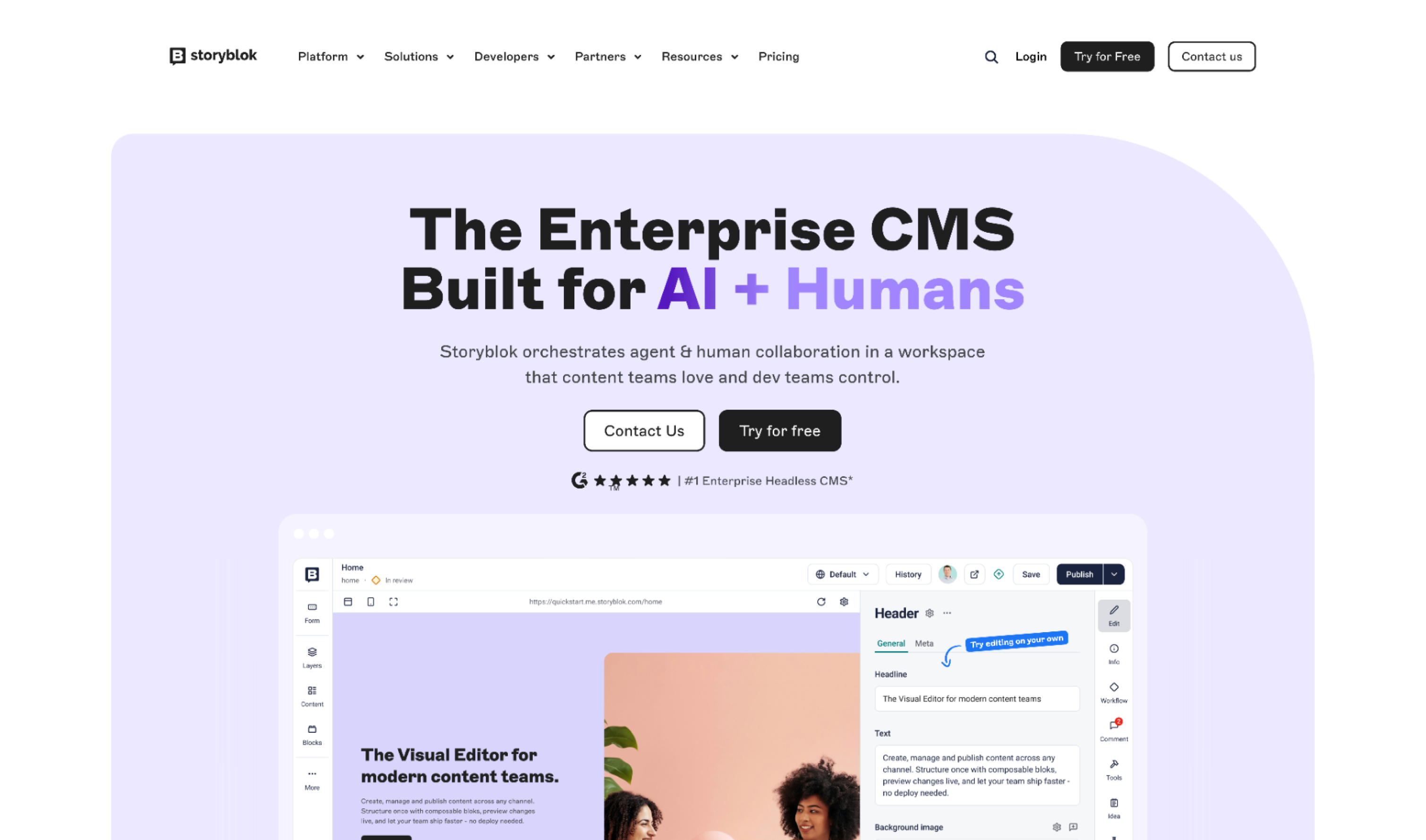
Storyblok is a headless SEO-friendly CMS offering an exceptional user experience. The platform offers multiple SEO capabilities, from the native SEO app to the image service, localization, and, of course, AI SEO.
Storyblok decouples content modeling from frontend presentation, giving developers full API control over programmatic metadata, API-driven XML sitemap generation via the Links API, and dynamic canonical tags, while granting marketing teams full visual field control via The Visual Editor. Through official SDKs, it integrates leading modern frontend frameworks, including Next.js, Nuxt, Astro, React, Remix, and Vue, while ensuring content structures remain fully optimized for AI search engines and LLM-driven retrieval.
Storyblok has its own SEO app, enabling you to enhance your online presence with a refined SEO strategy. The app offers convenient metadata controls, enriching your toolkit with a range of features designed to boost your website's visibility.
But it's only the beginning! Storyblok's AI SEO feature is a game-changer for content creators. It analyzes your story's content to generate optimized metadata and key HTML tags, significantly boosting visibility with minimal effort.
Storyblok has built-in support for creating multilingual websites that improve your website's accessibility across languages and regions.
Another major benefit of using Storyblok is that it offers SEO-friendly content structures. These structures are specifically designed to make sure that your website is easily discoverable by search engines. They provide customizable metadata, user-friendly URL structures, and XML sitemaps, which help to align your content with search engine algorithms and make it visually appealing. All of these features work together to optimize your website's search engine ranking.
Images can also be optimized for the most demanding search engines. Storyblok's image service provides you with high-quality images in different formats and sizes for all devices and platforms.
Make your visuals work harder for your SEO. Storyblok's image service automatically delivers high-quality, fast-loading images in the right format and size for every device, optimized to impress always-changing search engine algorithms.
In terms of page speed and performance, Storyblok excels with its headless approach, ensuring a seamless mobile experience with faster loading times. Storyblok's headless architecture provides the flexibility to integrate additional SEO tools, thereby allowing you to scale your website's optimization journey.
2. WordPress

Undoubtedly the most popular open-source CMS, WordPress offers a vast library of SEO plugins, themes, and customization options. This versatility allows you to tailor your website's SEO strategy to meet your specific needs.
Whether it's optimizing meta tags, generating XML sitemaps, or implementing structured data markup, WordPress provides a wide range of SEO tools to enhance your visibility in search engine results.
3. Drupal
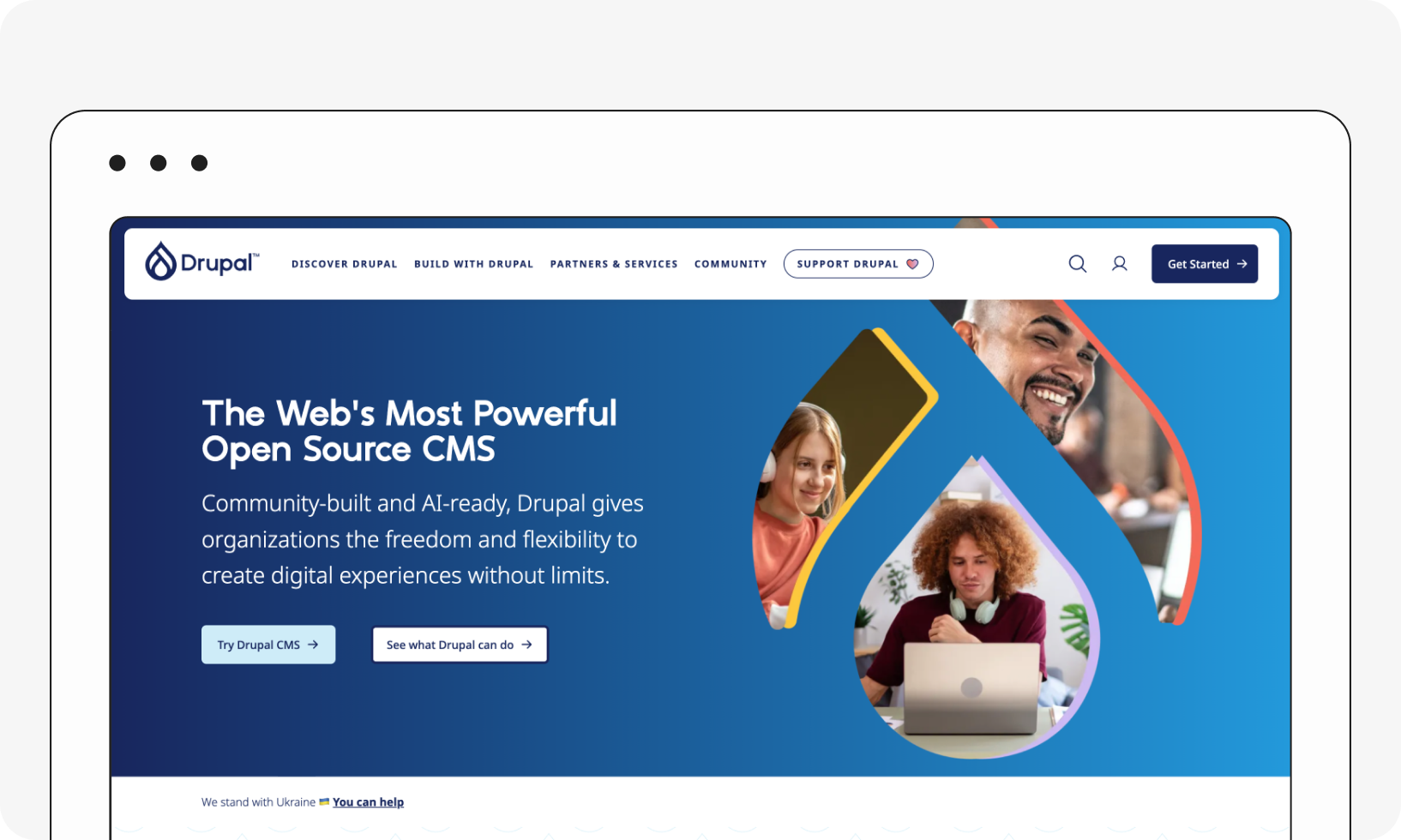
Known for its flexibility and scalability, Drupal is a CMS that offers advanced SEO features. One notable feature is its support for semantic markup, which helps search engines find and better understand your website's content and context.
Additionally, Drupal enables easy generation of XML sitemaps, ensuring that search engines can efficiently crawl and index your website for improved visibility in search results.
4. Joomla
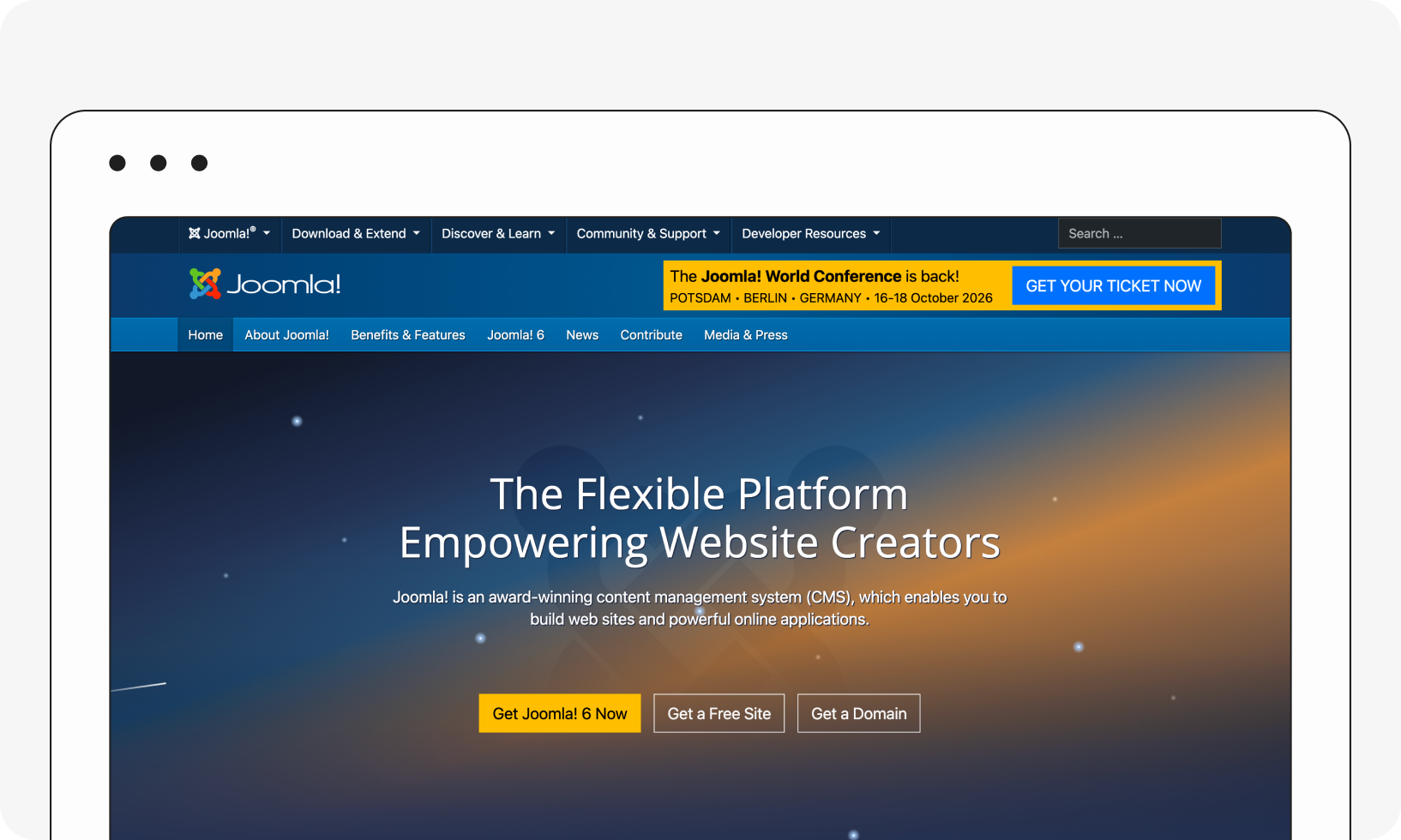
Joomla offers a user-friendly interface and various SEO extensions to optimize your website for search engines. It's a reliable option for those seeking a balance between ease of use and SEO capabilities.
Developed by a community of volunteers, its open-source approach offers collaborative, transparent development that can benefit the overall code quality. The fact that it’s free doesn’t hurt, either. With respectable support for customization and multilingual experiences, Joomla has been a favorite amongst legacy teams for years. Despite this, the classic system has started to show its age recently. Faster-paced content teams are certain to feel the absence of modern APIs and developer tooling, especially as the community of fellow users dwindles. Lastly, it’s worth noting that costs incurred from web hosting, custom development, and maintenance can add up in an open-source system.
5. Webflow
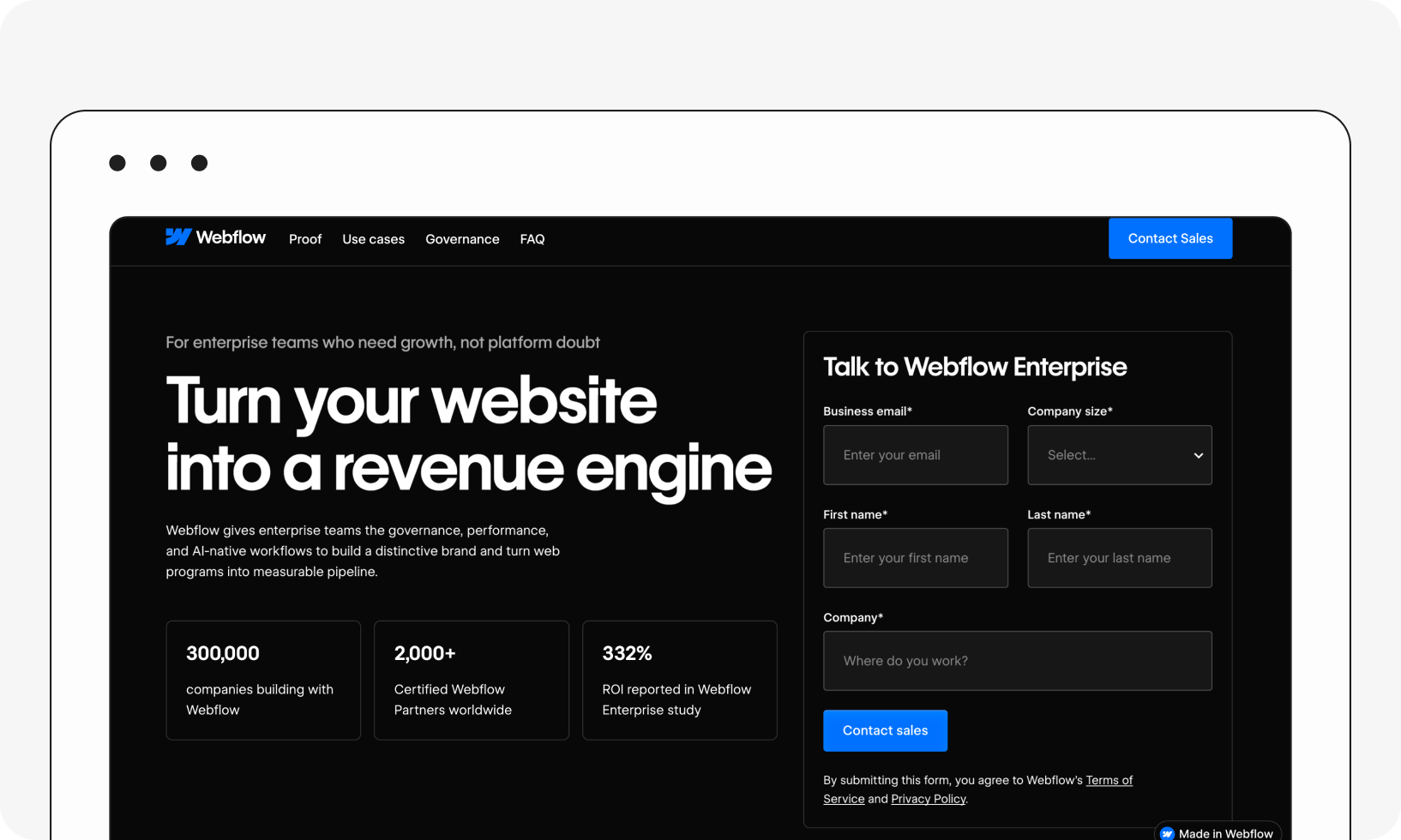
Webflow offers a visual CMS that empowers users to customize and optimize their website's content for search engines. With its intuitive interface, you can easily make changes and adjustments to improve your website's SEO performance. This includes optimizing meta tags, headings, and other on-page elements contributing to rankings.
6. Adobe Experience Manager (AEM)
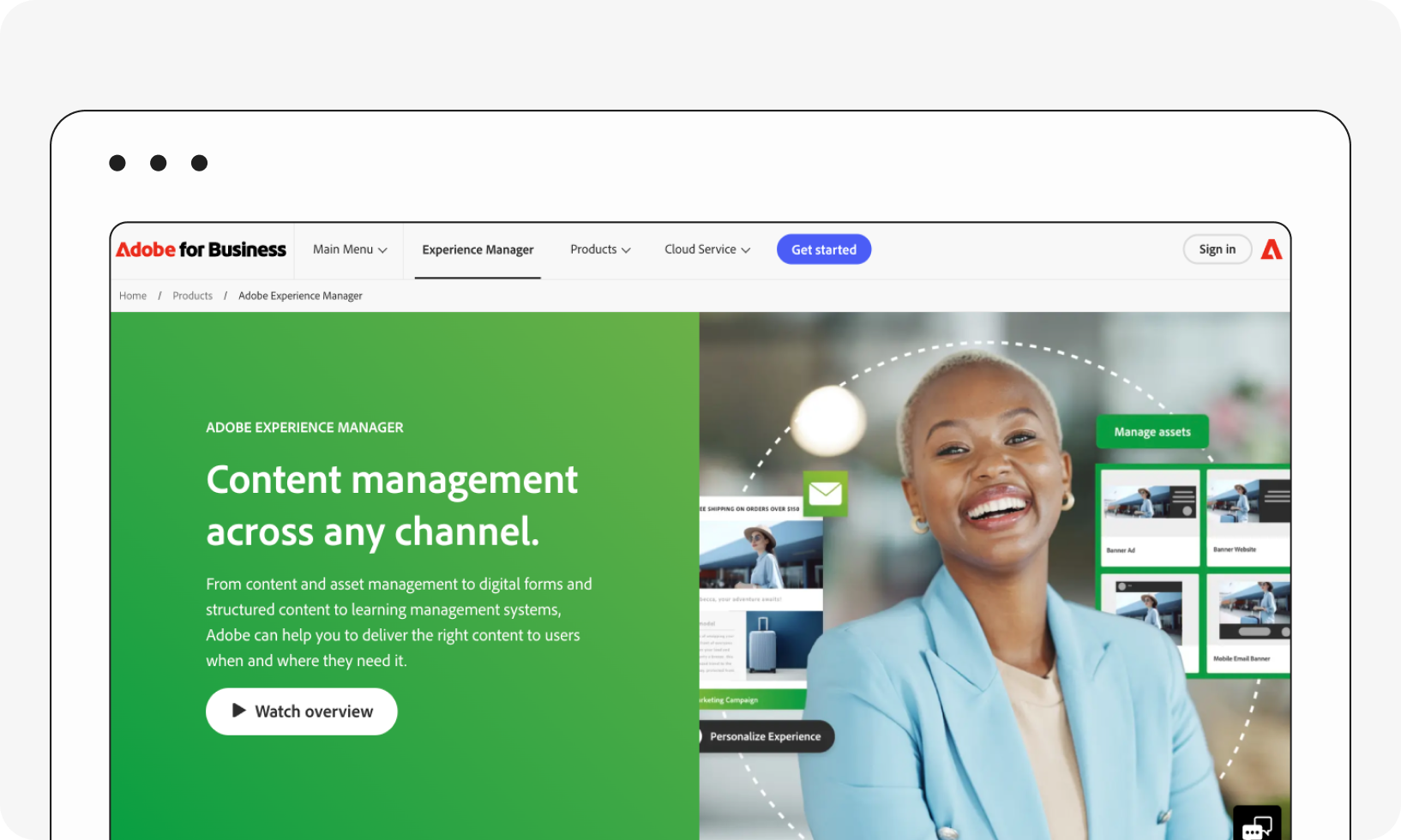
Adobe Experience Manager is a robust CMS that offers advanced SEO features to optimize your website's visibility. Dynamic tag management allows you to efficiently manage and track your website's tags for enhanced SEO performance.
7. HubSpot CMS
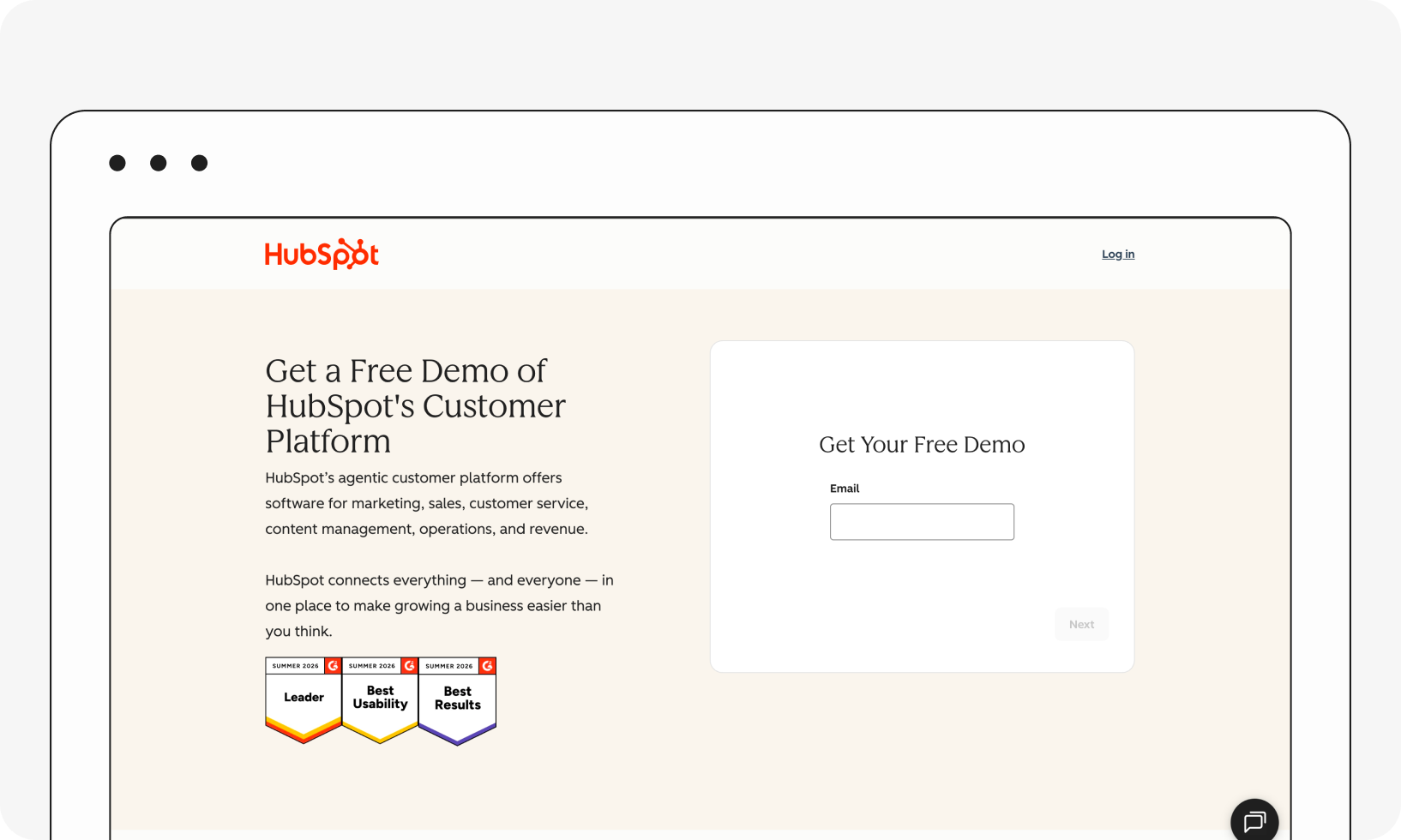
HubSpot CMS provides an all-in-one solution encompassing SEO tools, content optimization, and marketing automation. With its SEO tools, you can easily research keywords, optimize on-page elements, and track your website's performance in search engine rankings.
The platform also offers content optimization features, allowing you to create SEO-friendly content that resonates with your target audience. Additionally, integrating marketing automation capabilities enables you to streamline your SEO efforts and drive better results.
8. Wix
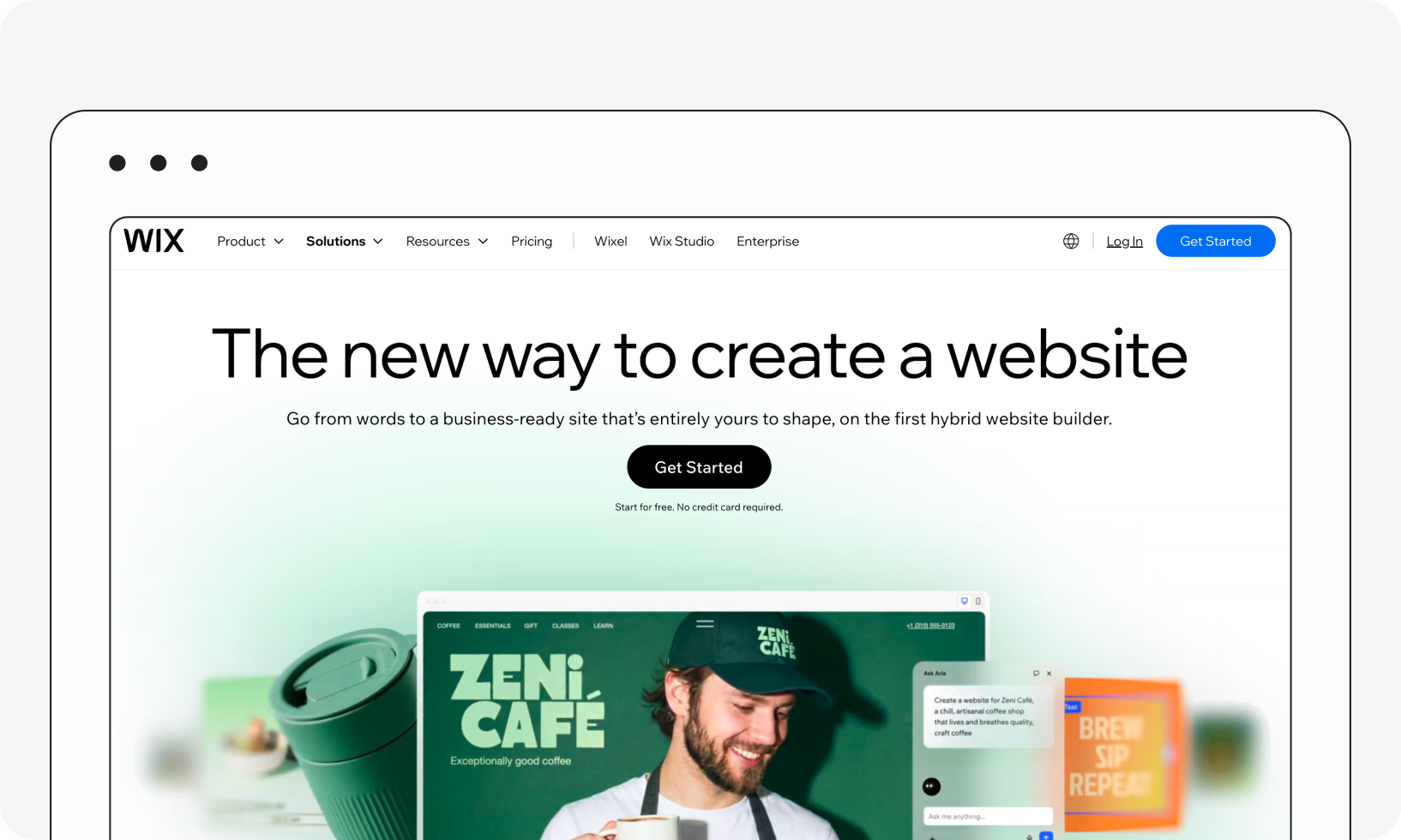
Wix is a user-friendly CMS with built-in SEO tools to help improve your website's visibility. With Wix, you can optimize your website's URLs to ensure they are search engine-friendly. The platform offers metadata management, allowing for customized meta tags and improved search engine rankings.
You can easily implement SEO features without deep tech skills due to Wix's intuitive drag-and-drop interface.
9. Hygraph
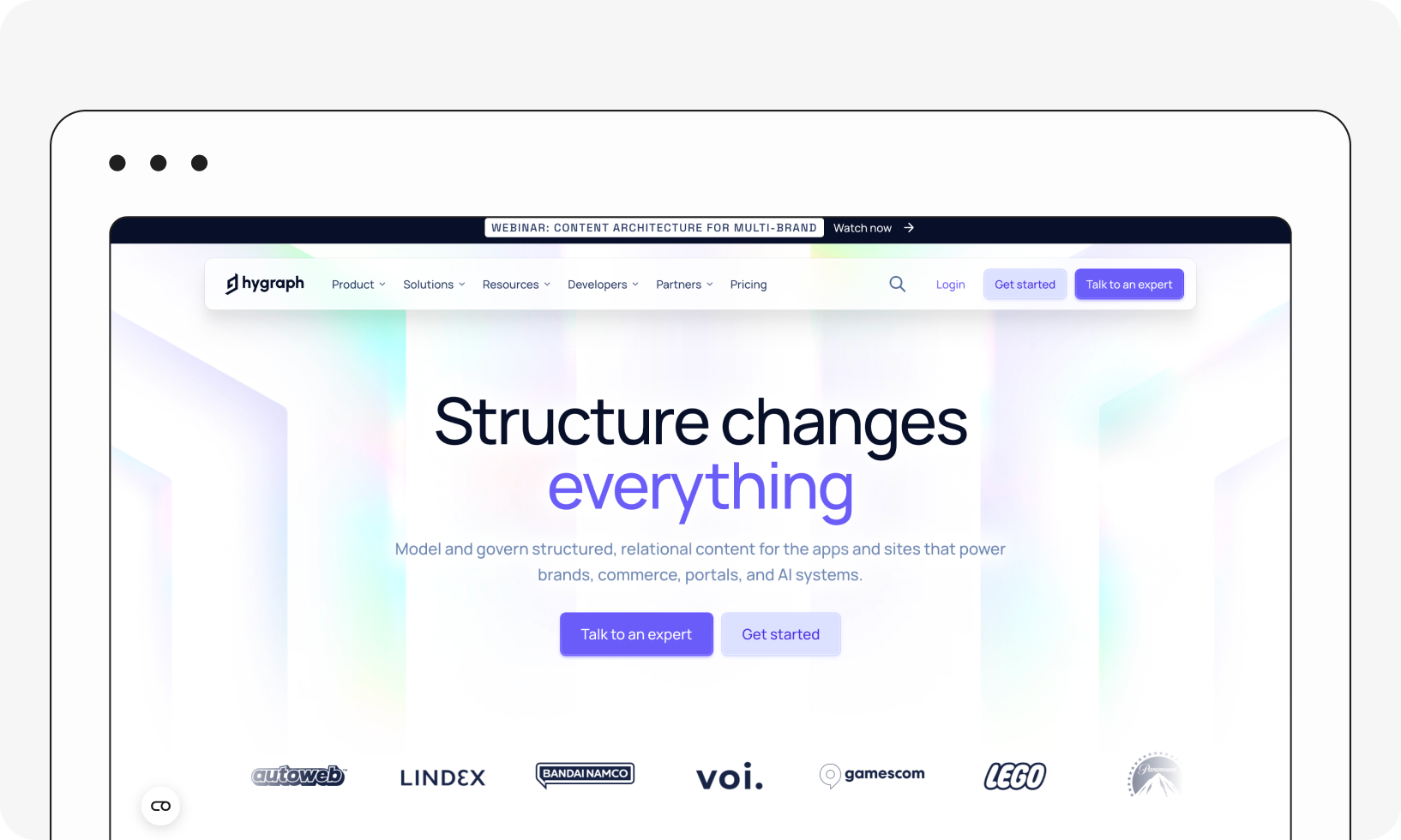
Hygraph is a headless CMS that offers advanced SEO features to maximize your website's visibility. With dynamic content optimization capabilities, you can tailor your website's content based on user behavior and preferences, ensuring a personalized and engaging experience.
Hygraph supports structured data markup, improving search engine understanding of content.
10. Shopify

Shopify stands out as a powerful CMS specifically tailored for eCommerce, offering features that streamline eCommerce SEO. Shopify simplifies the creation of SEO-friendly product pages with a user-friendly interface, customizable URLs, and built-in CDN support, ensuring fast loading speeds.
Its mobile responsiveness meets search engine criteria, enhancing visibility across devices. Shopify's SEO features include customizable metadata, enabling fine-tuning for optimal search engine performance. Shopify is an excellent choice for businesses looking to integrate their online retail and optimize SEO through continuous updates.
Headless CMS vs monolithic CMS for SEO: A quick comparison
Traditional CMSs can be great for smaller teams looking for an all-in-one tool that works right out of the box. But as a website grows and your digital presence becomes a complex product, the monolithic, unified setup can often slow down and become harder to manage. A headless CMS solves this by keeping your content separate from your site's design—giving you faster load times, cleaner code for search engines to read, and more room to scale.
Here is how headless and monolithic systems compare across key factors:
Feature / Evaluation criteria | Headless CMS (e.g., Storyblok) | Traditional CMS (e.g., WordPress) | SEO Impact |
|---|---|---|---|
Core Web Vitals | Pre-rendered pages (SSG to SSR) load almost instantly from global edge networks, without bulky theme code slowing things down. | Bundled themes, heavy database queries, and script-heavy plugins frequently degrade LCP and INP at scale. | When implemented with a lean frontend and the right rendering strategy, faster loading times can directly improve rankings and reduce bounce rates. |
Metadata and Structured Data (Schema) | . Content teams can update title tags and meta descriptions right inside Storyblok. Once developers map your structured content fields to schema markup, every update reflects automatically when the page rebuilds or refreshes. | Typically reliant on third-party plugins that can add code overhead or conflict with other theme scripts and templates. Custom dev implementations avoid plugins, but require dedicated engineering time and ongoing maintenance. | Clean structured data helps search bots and AI answer engines interpret page context accurately. |
Multi-Language, hreflang and Global SEO | Storyblok supports field-level, folder-level, and space-level translation. Every story in the Content Delivery API response includes its translated slugs and its alternate language versions. Developers can use these to generate hreflang tags directly, without a third-party SEO plugin. | Usually requires multisite networks or heavy translation plugins that complicate database management. | Prevents regional keyword cannibalization and ensures proper search visibility across international markets. |
Security maintenance | Decoupling automatically hides the content layer behind an API, to minimize attack surfaces, while letting developers update the presentation layer independently for seamless security patching. | Requires manual, active updates and maintenance across the core system, themes, and plugins to prevent vulnerabilities. | Prevents sudden traffic drops, organic ranking loss, data theft and leaks caused by malware, site downtime, or hacked pages. |
It is important to understand that website performance is highly implementation-specific and requires a significant level of expertise. Dive into the details of our Headless vs. Monolithic CMS guide and discover what you need to deliver the best site performance for your brand.
Still wondering which CMS is best for SEO?
Choosing the right CMS for your website is crucial for your online success. Remember to consider the key features we discussed before making your final decision. The best platform does not force engineering to handle routine meta tag edits, nor does it force marketers to publish on slow, bloated templates. By unifying an API-first headless engine with a real-time Visual Editor, you give developers total architectural control while empowering content teams to publish with confidence. Get a demo to see how Storyblok can help teams structure content for everything that AI brings next.
Frequently asked questions
What CMS supports SEO best?
A CMS best supports SEO when it combines fast frontend rendering, automated sitemap generation, and granular metadata controls. Headless CMS platforms like Storyblok excel by decoupling content from code to maximize Core Web Vitals, while monolithic platforms like WordPress rely on third-party plugins.
What CMS lets content editors manage SEO without developers?
Modern headless CMS platforms with visual editing environments allow content editors to adjust title tags, meta descriptions, Open Graph data, and URL slugs directly on live previews without requiring code deployments or developer assistance.
How do I evaluate a CMS for technical SEO?
To evaluate a CMS for technical SEO, assess Core Web Vitals performance, native metadata customization, visual editing workflows for marketers, and rendering architecture flexibility. The platform must support server-side rendering or static generation to ensure search engine crawlers can index complete HTML.
What questions should you ask a CMS vendor about SEO?
Ask vendors to demonstrate live workflows rather than feature lists. Request proof across three core areas: editorial governance with visual guardrails, frictionless multi-market scalability without developer dependencies, and flexible technical capabilities that allow teams to adapt immediately when search algorithms shift.